Subject overview

Leaving Certificate Geography helps students understand the relationships between people, place, and environment, while developing strong academic skills that support further study and life beyond school.

What students gain
  • Critical thinking
    Interpreting evidence, evaluating patterns, and building reasoned conclusions.
  • Research and investigation skills
    Collecting, analysing, and presenting data with accuracy and clarity.
  • Geographical literacy
    Confident use of maps, statistics, field sketches and (where appropriate) GIS.
How Geography is taught at ETSS Wicklow

Teaching and learning is grounded in active methodologies, enquiry, and strong academic expectations — with a consistent focus on building independent learners.

In the classroom
  • Enquiry-based learning through question-led lessons and structured investigation.
  • Data interpretation using graphs, statistics, maps and field evidence.
  • Geographical writing with explicit modelling, feedback, and exam-style practice.
Approach and culture

Students are supported to think like geographers — questioning evidence, forming arguments, and applying learning to unfamiliar contexts. Clear routines, targeted feedback, and high-quality resources help students build confidence over the two-year programme.

What this looks like week-to-week
  • Short, purposeful retrieval and recap to strengthen long-term memory.
  • Explicit teaching of key terms and processes using diagrams and modelling.
  • Regular interpretation tasks: maps, photos, figures, and short datasets.
  • Structured writing practice with success criteria and feedback.
Supporting all learners
Students benefit from clear scaffolds, accessible resources, and a focus on inclusive practice so that all learners can engage meaningfully with the subject.

Fieldwork as a core philosophy

Fieldwork is central to our department identity. Students learn by observing, measuring, and analysing geographical processes in real environments.

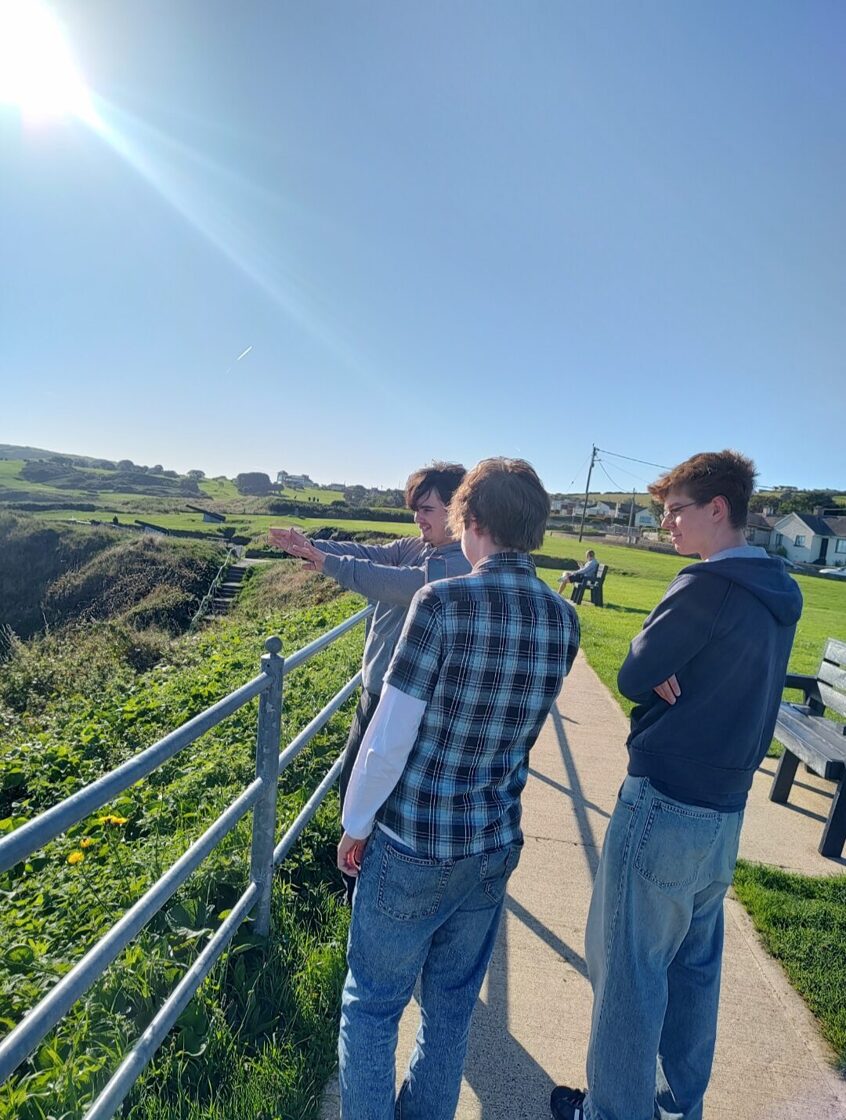
Urban fieldwork in Wicklow town
Local investigations

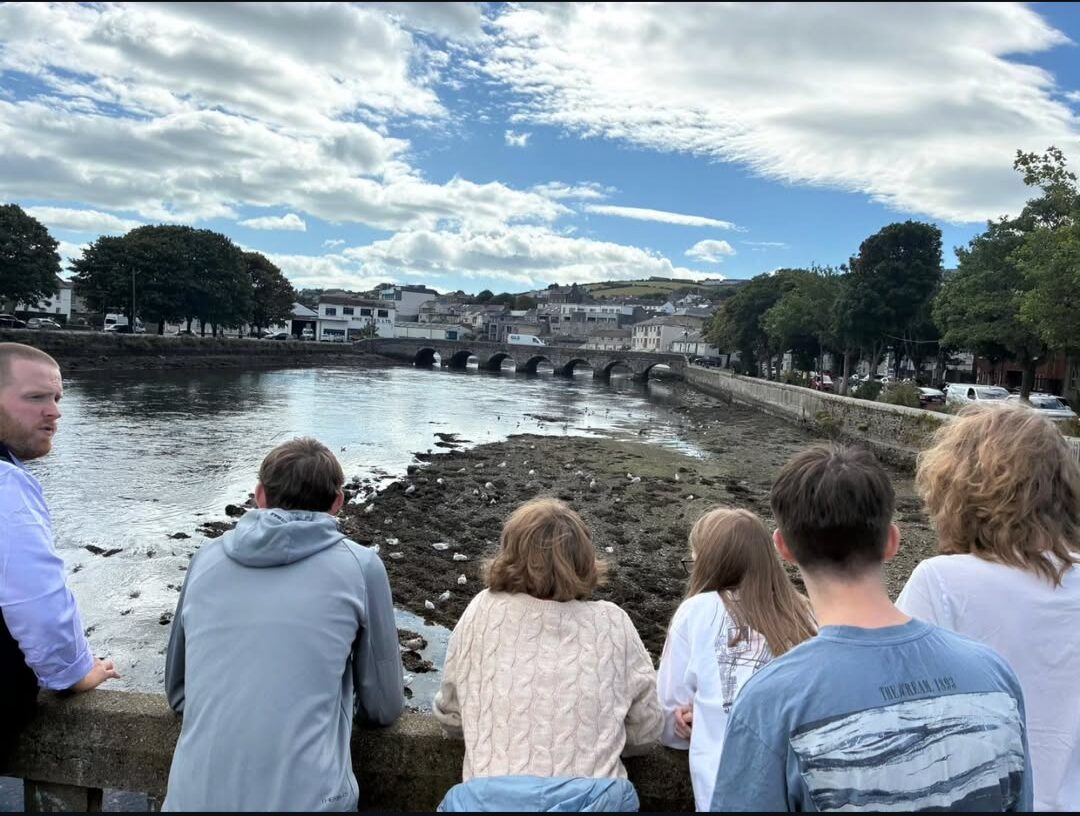
Regular fieldwork close to the school helps students build confidence with geographical methods and data collection. This includes urban fieldwork in Wicklow town, coastal studies, and nearby fluvial investigations.

Fluvial fieldwork near Wicklow
Further afield
  • Glacial landscapes in Glendalough and the surrounding Wicklow Mountains.
  • Karst landscapes in the Burren, including limestone landforms and processes.
  • Coastal landforms at locations such as the Cliffs of Moher.
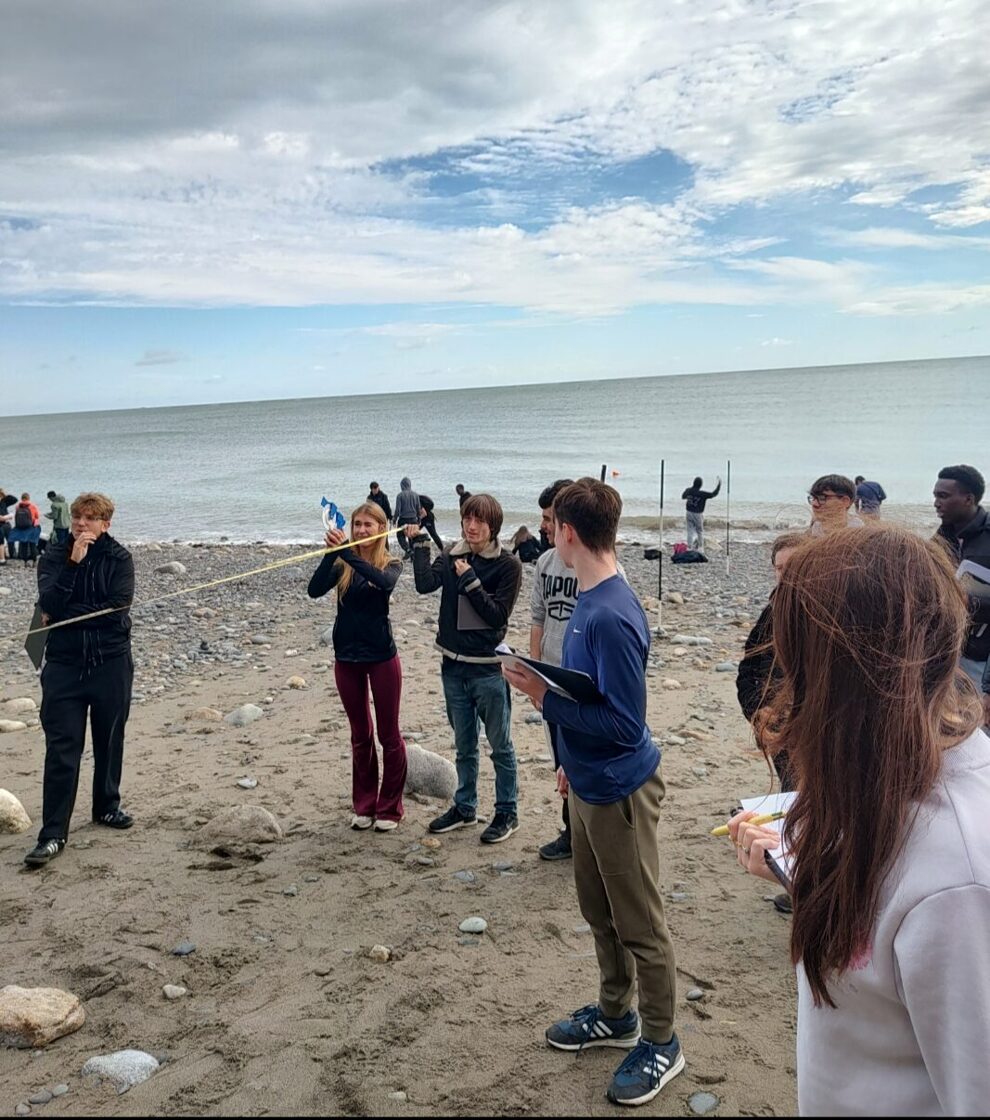
Coastal fieldwork

These experiences support the Geographical Investigation and strengthen independent research skills.

Geographical Investigation (GI)

Students are guided through the full investigation process — from forming a research question, to gathering primary data, to analysis and evaluation. We place a strong emphasis on accuracy, reflection, and presenting findings clearly.

Innovation & partnerships

Geography at ETSS Wicklow extends beyond the textbook through live projects and partnerships that connect students with real data and real-world research.

Met Éireann rainfall project

As part of an ongoing department project, students are recording historic rainfall figures in support of a wider study being undertaken alongside Met Éireann. This work strengthens students’ data-handling skills and highlights the role of long-term records in understanding climate patterns and change.

What students learn through the project
  • How rainfall datasets are recorded, verified, and interpreted over time.
  • How climate trends are identified using evidence rather than opinion.
  • How geography connects directly to national scientific and environmental work.
Department update video

ETSS Wicklow Climate Action Sustainable Development and Geography Department Update

You can replace or reposition this video anywhere on the page as your layout evolves.

Academic excellence & professional engagement

Our department is involved in professional practice and research beyond the classroom, helping ensure that teaching is current, reflective, and informed by best practice.

Professional engagement
  • PME involvement
    Members of the department work as inspectors/supervisors for PME programmes with Trinity College Dublin.
  • Positive practice
    The department has been used as an example of positive practice in projects focused on teaching secondary-level Geography.
  • Universal Design for Learning (UDL)
    Department members are co-authors of an upcoming book: Realising Authentic Inclusive Education through Universal Design for Learning: Subject-specific Examples from the Classroom.

Note: The UDL book is forthcoming and has not yet been published.

Student achievement & enrichment
  • International Geography Olympiad (iGeo) 2024
    Two Geography students represented Ireland at iGeo 2024 after winning the national competition, competing at international level.
  • National competitions
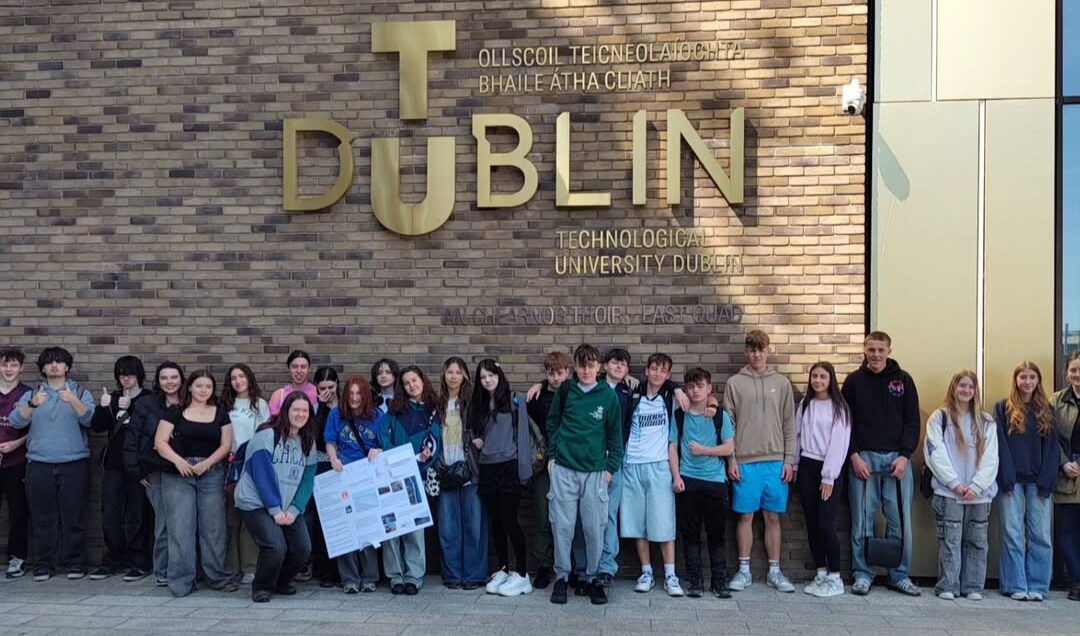
    Students regularly take part national competitions such  as the Pathways for Young Geographers competition, run by Technological University Dublin (TUD).
  • Extending learning
    Competitions and enrichment opportunities encourage ambition, deeper geographical thinking, and confidence beyond the classroom.
Screenshot_20260110-151107.jpg

Assessment & skills development

Assessment supports learning and examination success through clear expectations, regular feedback, and structured exam preparation.

What we build

Strong written responses, accurate terminology, and the ability to interpret and evaluate information across different contexts.

How we assess

A balance of formative feedback and exam-focused tasks helps students improve steadily and build confidence over time.

Preparation

Frequent practice with exam-style questions, supported by modelling, success criteria, and targeted guidance.

Want to learn more about Leaving Certificate Geography?

If you have questions about the programme, fieldwork opportunities, competitions, or how Geography supports future pathways, please get in touch with the school.

Contact the school